Autophagy: Flase Gods
We have spent three centuries handing ourselves over.
Each dominant technology of the modern era has absorbed a capacity humans once held as their own. The Industrial Revolution took the body's labor and called it liberation. The Information Revolution took memory, recall, and orientation, and called it convenience. The cognitive revolution is taking the thinking itself, and we are calling it intelligence. Each surrender has been justified as progress. Each one has narrowed what humans understood themselves to be for.
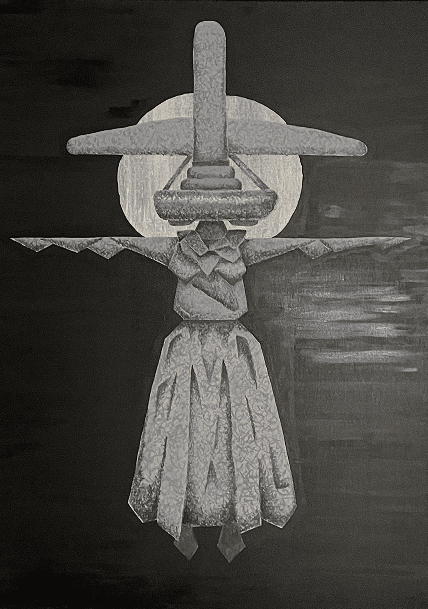
Autophagy: False Gods is a body of fifteen paintings that sits inside this longer pattern. Autophagy names a biological process: the cellular machinery by which an organism consumes its own components, sometimes for renewal, sometimes as the prelude to its own collapse. The series asks which of these we are inside, and what we have already begun to worship in the place of what we lost.
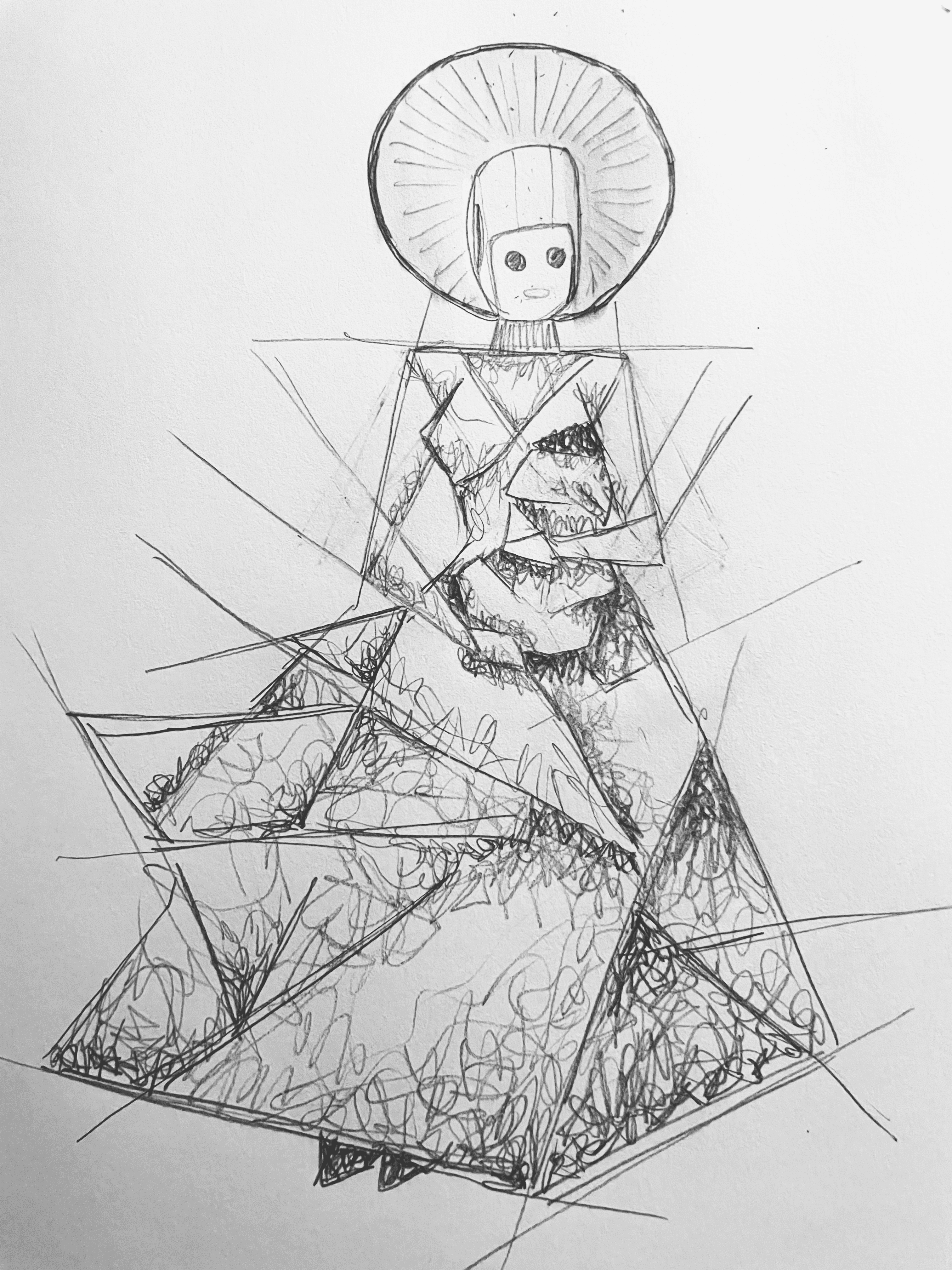
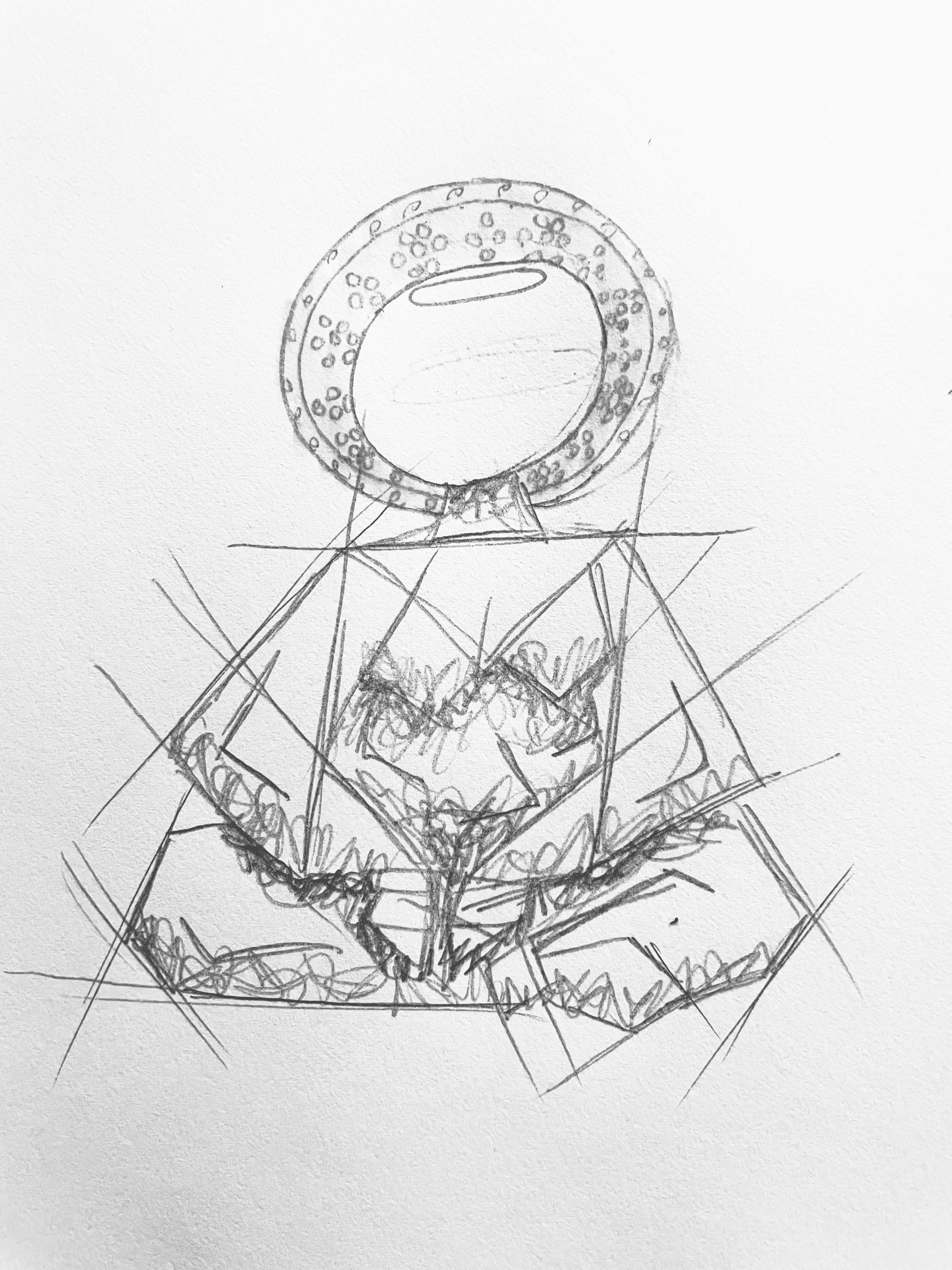
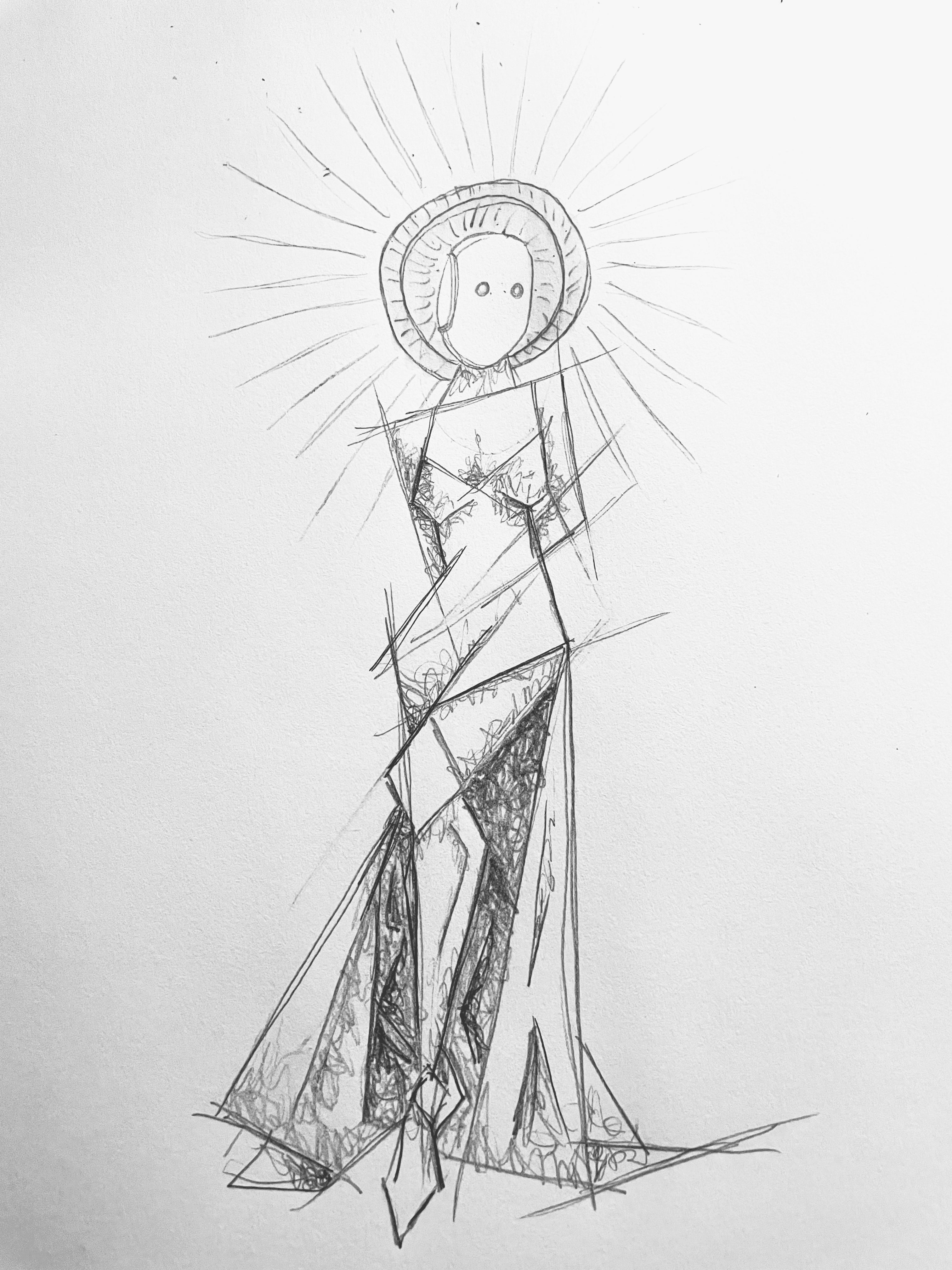
Each painting renders a figure caught between forms. These are the false gods. The head (where thought once lived) has been replaced by an apparatus of this present era of intelligence. A halo presses behind each figure, citing a particular work from the long Western tradition of paintings depicting reverence and devotion. The figures themselves draw structurally on archetypes we have inherited and never quite outgrown.
The paintings are constructed in acrylic through accumulated crosshatching, a technique inherited from drawing rather than painting. Hatching is the most explicitly handmade mark in any visual medium: proof of an intentional human action made repeatedly through the human hand's particular movement. Across surfaces that depict the dissolution of the human form, every line is a small contemplation of what remains human vs what becomes machine. The technique and the work itself enacts the thesis it cannot resolve.
The body of each figure is rendered in true grayscale, drained of the chromatic life the eye associates with presence. Color is held in only two places: the gold of the halo, and the apparatus head. The human form has lost its color along with its labor, its memory, and now its mind. The only living color in each painting is what we have surrendered ourselves to.
Around the edge of each canvas, in a position not visible from the front, the painting's identity is recorded in binary. From the front, it is the hidden layer you do not interface with… just as it sits in technologies today.
I am not interested in critiquing the apparatus, and I am not interested in mourning what came before it. Both positions offer the viewer an opportunity to reflect on applications of artificial intelligence in the world today, and contemplate for themselves what they themselves adopt and refuse. The works are meant to construct a situation in which the viewer cannot avoid noticing their own position within the larger picture: toward this technology, what they have already surrendered, and what they desire to still remain human. The figures in Autophagy: False Gods are not cautionary. They are mirrors, and the question they hold is not mine to answer. What will the viewer allow themselves to cannibalize, and what will they believe holds a place to live on?
— KENZIE
KENZIE
Social
Instagram - @kenzieart_official